 Skip to content


Posted by momina abbassi - November 2, 2026
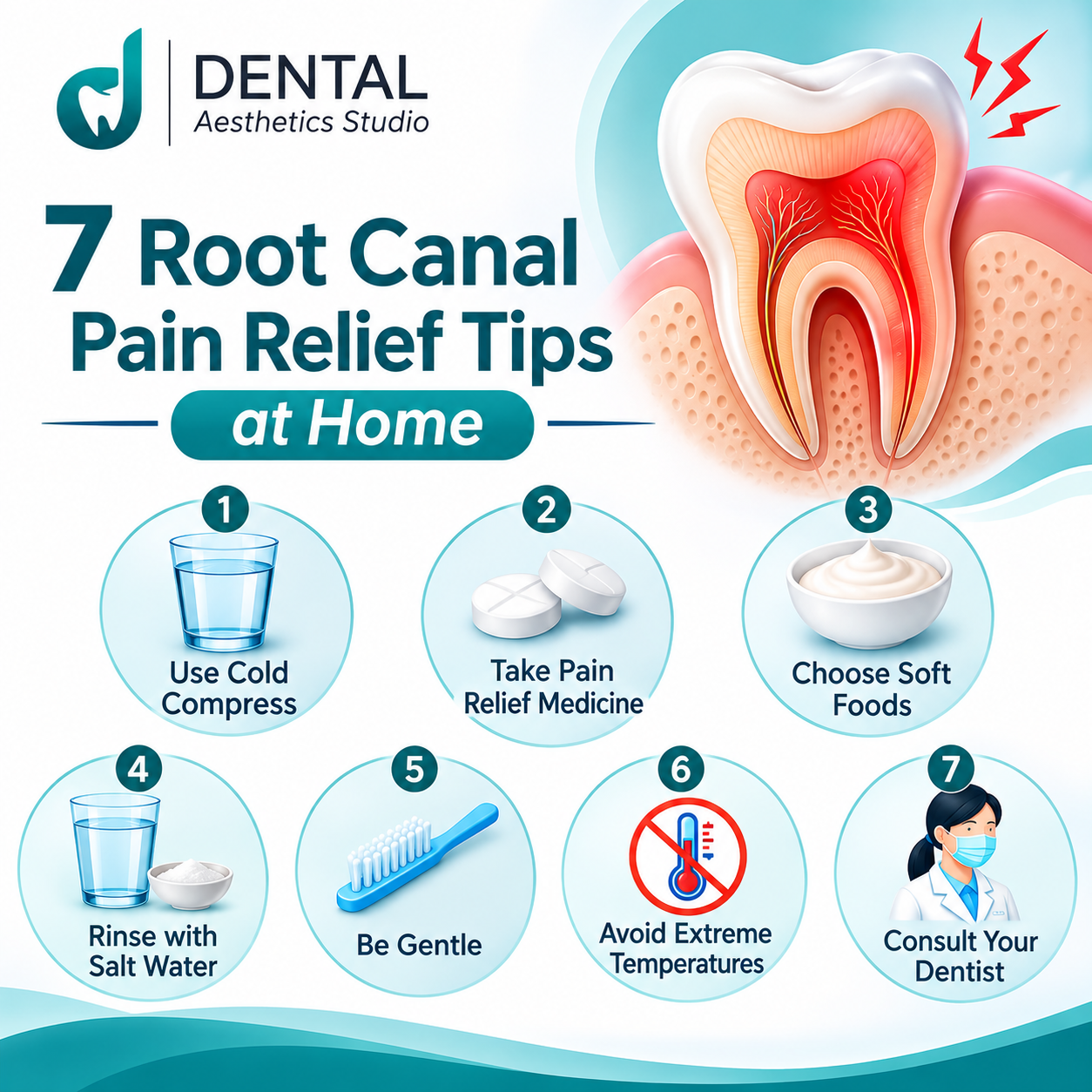
A sore tooth can make everyday tasks difficult. When a toothache hurts deep inside the tooth, it can be hard to eat, drink, talk, and get a good night’s rest. If you have recently had a root canal, or your dentist suggested one, you might have questions about how to help alleviate root canal pain at home. Fortunately, there are a few easy strategies that can help alleviate some of the symptoms. But it’s essential to know more than just how to control the pain; you need to know what’s causing the pain. Dr. Huma Abbasi at Dental Aesthetic Studio believes it is crucial to educate patients on their treatment options and help alleviate any dental discomfort by diagnosing the problem properly and providing personalized care.
Why Does Root Canal Pain Occur?
The reasons for post- or pre-root canal pain vary, but it can happen after or before the treatment. When bacteria invade the soft tissue inside the tooth (pulp), severe toothache usually occurs before treatment. This can cause the pain to be throbbing, pressure or sensitivity and result in inflammation or infection. Following the root canal, the rest of the body can be tender for several days until it heals. Some pain when chewing is fairly common, especially when the tooth was very painful prior to treatment.
The American Association of Endodontists states that minor pain following a root canal procedure typically lasts for a short time. Severe or worsening pain should be evaluated by a dentist.
7 Root Canal Pain Relief Tips to Control Ache at Home
Although home remedies cannot cure an infected tooth, they may help reduce discomfort until you receive dental care or while recovering from treatment.
1. Take Appropriate Pain Relief Medication
Self-prescribed pain relievers are frequently the initial treatment when it comes to oral pain. Some medicines can help relieve pain, e.g., ibuprofen or paracetamol. Also, Ibuprofen may help to relieve inflammation, and Paracetamol helps relieve pain for individuals who cannot take some other anti-inflammatory drugs.
Not all medicines are appropriate for all individuals, though. Certain patients may have medical conditions or be prescribed medications that limit the types of pain relievers that can be used.
Always take your dentist’s advice or that of the medicine’s label, and always ask for some medical advice if you’re not sure. Do not exceed the recommended dosage.
2. Apply a Cold Compress to Your Cheek
Apply a cold compress to ease any minor swelling and discomfort around the affected area. Place an ice pack in a clean towel and gently press it against the outside of your cheek for about 10–15 minutes. Take it out for a break and then reapply. Do not put ice on the skin or in your mouth. A cold compress can be beneficial after dental care, if any surrounding tissues are tender.
3. Rinse Gently With Warm Salt Water
A warm saltwater rinse can help keep your mouth clean and soothe irritated gums. Mix half a teaspoon of salt into a glass of warm water. Swish gently around your mouth and spit it out. You can repeat this a few times daily if it feels comfortable. Remember that saltwater does not reach an infection inside the tooth and cannot replace root canal treatment. If you have recently undergone a dental procedure, follow your dentist’s instructions about when rinsing is appropriate.
4. Avoid Hard, Crunchy, and Sticky Foods
Pressure placed on a painful tooth, such as by chewing, may make it more uncomfortable. While you have a tooth that needs treatment or is still being restored, eat foods that don’t need much chewing. Choose soft rice, scrambled eggs, mashed potatoes, porridge or lukewarm soup. Chew the opposite side of your mouth. Don’t eat food that might damage a temporary filling or chewing gum, nuts, or hard sweets. If you’ve just had a root canal, try to avoid biting your tongue or cheek while it is still numb.
5. Keep Your Head Slightly Elevated
Toothache can sometimes feel more noticeable when you lie down, especially at night. Try resting with your head slightly elevated using an extra pillow. Some people find that this makes the discomfort easier to manage. Maintain a comfortable sleeping position that supports your neck. Although elevation does not treat the underlying dental problem, it may help you rest while arranging appropriate care.
6. Maintain Gentle Oral Hygiene
You might not want to brush your teeth if they are painful. But if you don’t take care of your mouth, then plaque can build up around the affected area. Brush twice a day with a soft-bristled toothbrush and a fluoride toothpaste. Gently clean around the tender tooth, being careful not to put too much pressure on the area. Gently floss when possible; do not push dental floss into swollen or painful gums. Maintaining oral hygiene helps to keep the mouth healthy, but does not cure the infection within the tooth.
7. Avoid Extreme Temperatures and Irritating Foods
7 Root Canal Pain Relief Tips to Control Ache at Home? A swollen tooth may be sensitive to hot or cold foods and beverages. Sweets, sugary foods, ice-cold water, and very hot tea can cause sensitivity. Opt for lukewarm (comfortable temperature) drinks and foods. If the food group consistently upsets him/her, steer clear of it until the dentist can locate the cause of the trouble.
How Long Does Pain Last After a Root Canal?
The majority of patients will only feel mild tenderness for a couple of days following a root canal.
As the tissues around the tooth heal, pain should decrease slowly. Depending on the extent of any inflammation or infection, some may take longer to settle before they do.
If you have severe pain, body swelling, pain that doesn’t go away after a couple of days or a bite that feels uneven, please reach out to your dentist.
When Should You See a Dentist for Root Canal Pain?
Not all toothaches need root canal treatment, but if symptoms persist, don’t ignore them.
If you notice:
- Severe or continuous toothache.
- Pain when biting or chewing.
- Sensitivity to cold or heat.
- Gums that are swollen or painful.
- A small raised area close to the tooth, resembling a pimple.
- Pain that comes back following previous dental care.
If a child swells in the face and has a fever, you need to get urgent dental evaluation. Rapidly increasing swelling, difficulty breathing or swallowing requires emergency medical care.
Get Professional Root Canal Treatment at Dental Aesthetic Studio
Home remedies can make dental pain easier to manage, but they cannot remove damaged or infected pulp from inside a tooth. If you are experiencing persistent toothache, professional diagnosis is the safest way to understand what is causing it.
At Dental Aesthetic Studio, Dr. Huma Abbasi, one of the best dentists in Islamabad, provides restorative dental care with an emphasis on patient comfort and preserving natural teeth whenever possible. A dental examination can help determine whether you need a filling, root canal treatment, or another procedure.
Final Thoughts:
7 Root Canal Pain Relief Tips to Control Ache at Home. Tooth pain can interfere with your daily routine, but the right care can make recovery more comfortable. Using appropriate pain medication, applying a cold compress, maintaining oral hygiene, and choosing softer foods may provide temporary relief.
However, these measures should never replace professional treatment when an infection or damaged tooth pulp is involved. If your pain is persistent or worsening, schedule a consultation at Dental Aesthetic Studio. Dr. Huma Abbasi can assess the problem and recommend suitable treatment to protect your oral health

