 Skip to content


Posted by momina abbassi - October 20, 2026
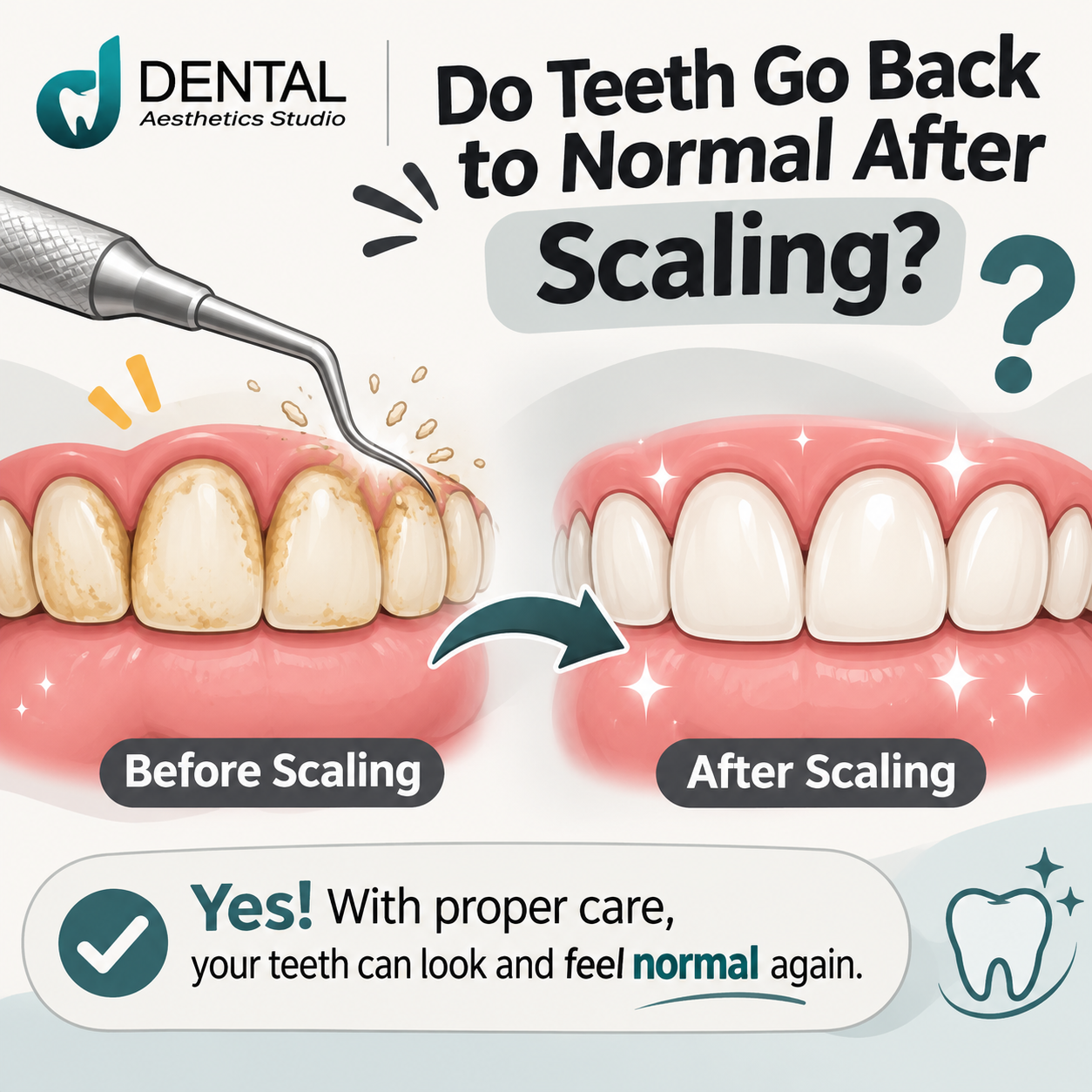
Dental scaling is a standard treatment that is performed to eliminate plaque, tartar and bacteria on the gum line and teeth. Many however, may notice changes after their first cleaning and ask themselves whether their teeth will go back to normal. Others have temporary sensibility and others feel small gaps between the teeth that are not felt before.
Knowing what to expect after cleaning can help to ease nervousness if you’ve just been cleaned or are thinking about having it done. Dr. Huma Abbasi at Dental Aesthetic Clinic educates patients about their oral health needs and provides expert dental care services to keep their teeth and gums healthy.
Do Teeth Go Back to Normal After Scaling?
Yes, after scaling your teeth will typically return to their normal state. But any changes you see right after the surgery may take a while to become less obvious.
Scaling gets rid of hardened tartar and plaque around teeth and gums. After these deposits have been removed your natural tooth surfaces are revealed again.
In some patients, spaces between their teeth become visible after brushing their teeth. These spaces are typically not scaler related. Rather, they could have been filled in with tartar or possibly uncovered as a result of the gum recession.
What Happens to Your Teeth After Scaling?
Some brief changes after professional teeth cleaning is normal.
1. Temporary Tooth Sensitivity
After scaling, your teeth could be sensitive to hot, cold and sweet foods. This occurs because by removing tartar, areas were uncovered that would be beneath there if there was not any tartar. Sensitivity typically increases in a few days.
2. Small Gaps Between Teeth
Some patients find gaps in their teeth when they brush. These areas could be covered by tartar. Scaling does not result in gaps or healthy tooth structure being removed.
3. Slight Gum Discomfort
If your gums were swollen or inflamed, they may feel tender after treatment. The gums might feel more comfortable and healthy as the inflammation subsides.
4. Smoother Teeth
Scaling eliminates deposits on the surfaces of teeth, and they feel smoother and cleaner. It will not alter the natural colour or form of your teeth, however.
How Long Does It Take for Gums to Recover After Scaling?
The amount of tartar and the state of your gums prior to treatment will affect recovery. If the gum inflammation is mild, the patient may feel better in just a few days. Persons suffering from more advanced gum disease may need more treatment and weeks to improve.
After your dentist’s instructions is important during recovery. Gently brush, floss between teeth, and refrain from abrasive brushing movements.
How Can You Maintain Your Teeth After Scaling?
Professional cleaning will help to wash away existing deposits but without proper oral hygiene, plaque may re-develop.These are a few easy methods to keep up your results: Dentist-recommended twice-daily brushing with fluoride toothpaste.Brushing twice a day with fluoride toothpaste.
- Use a soft bristle toothbrush.
- Floss once a day to get rid of food particles between the teeth.
- Reduce sugary foods and beverages.
- Drink adequate amounts of fluids during the day.
- Don’t smoke or use tobacco.
- Have routine dental exams.
Please get your teeth cleaned professionally every six months, or as often as your dentist advises, depending on the health of your gums.
Is Scaling Safe for Your Teeth?
Yes, it’s usually safe to have professional scaling, provided that it is done by a dental professional. It clears plaque and hardened tartar but does not harm your tooth enamel.
Many people believe that teeth loosen when they are scaled. In fact, advanced gum disease can cause teeth to be loose. Once the tartar is removed, it can become more apparent that the mobility has improved because the tartar was holding or supporting the areas.
Dr. Huma Abbasi at Dental Aesthetic Clinic looks at the dental condition of each patient before recommending the appropriate cleaning or periodontal treatment.
When Should You Visit a Dentist After Scaling?
Gum tenderness and sensitivity are generally short-lived. If any bleeding persists, or if the pain is severe, swelling, or the tooth is getting loose, it may be a sign of a problem, and you should see your dentist.
These symptoms may be signs of a dental or gum condition which needs to be further evaluated.
Final Thoughts
Do Teeth Go Back to Normal After Scaling? In most cases, yes. Your teeth and gums should feel better after the procedure, but it will take a little longer depending on your existing oral health condition.
The scaling process helps to get rid of the harmful deposits and promotes healthier gums. If you see any unusual changes after cleaning, do not assume they’re permanent, but consult a dental care professional.
Dental Aesthetic Clinic, led by Dr. Huma Abbasi, offers consultations and expert advice to help patients achieve their best smile. Schedule a consultation to talk about dental health and the best dental care for your teeth.
