Skip to content


Posted by momina abbassi - September 24, 2026

When you are told that you need a dental crown, it can be confusing, particularly if you don’t feel pain when you bite down on your tooth. The question that you might ask yourself is whether a crown is needed or just a filling will suffice. Crowns may take longer and cost more than fillings, so you may want to ask your dentist why he or she recommended them.
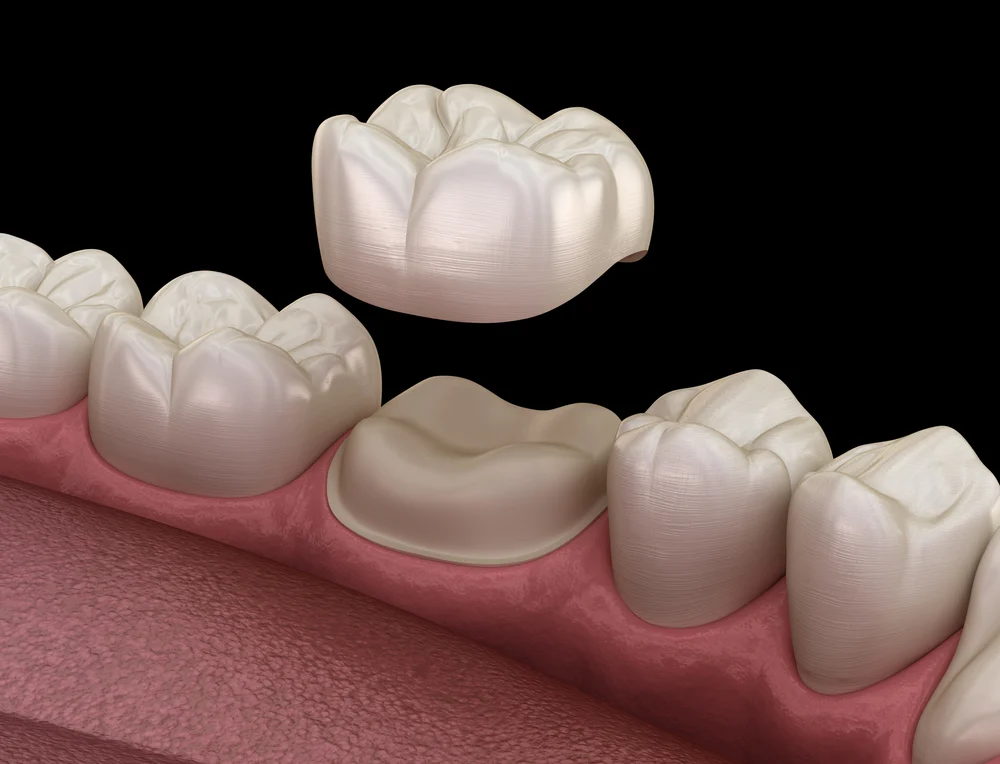
A dental crown is a custom-made cap that goes over a tooth. It will help to reconstruct the shape, size, and function of the tooth and will provide protection to the weak areas. Why do dentists push for crowns? They also offer crowns when a tooth has sustained damage, as it requires more protection than a filling.
What Is a Dental Crown?
The tooth crown is the portion that you can see above the gum line. It can replace a tooth that has been weakened due to decay, a fracture, or previous dental treatment.
Crowns may be constructed of porcelain, ceramic, metal, or composite. Selects material based on position of tooth, biting forces, esthetic requirements, and clinical requirements.
A crown can be used to prevent a weak tooth from fracturing, to repair a damaged tooth, or to help a tooth after some procedures. Not all broken teeth, though, require one.
Why Might Your Dentist Recommend a Crown?
1. The Tooth Has a Large Cavity
Removing a large portion of the tooth can leave the rest of the tooth extremely weak. Sometimes the filling may not be strong enough, particularly if it is placed in a molar, or rear tooth, and placed under heavy chewing forces.
The remaining tooth structure can be covered and protected by a crown. Your dentist should inform you if the decay is extensive and the reasons for not relying on a filling.
2. The Tooth Is Cracked or Broken
A cracked tooth can be exacerbated when biting or chewing. If the crack is located and/or severe, a crown will assist in keeping the tooth intact and prevent further damage.
A crack that penetrates through the root of the tooth, however, may make it extremely difficult or impossible to save the tooth. In order to give treatment recommendations, the dentist needs to evaluate the crack.
3. You Have Had a Root Canal Treatment
Root canal treatment eliminates the infected or inflamed material within a tooth. The amount of tooth structure remaining and location of the tooth will dictate how it should be restored afterwards.
The back teeth tend to be weaker and can be brittle in nature, which is why they are more likely to break under force due to chewing. If there’s sufficient healthy structure left in some front teeth, they can be filled. Your dentist should make an evaluation of your specific tooth and not prescribe the same restoration for all patients.
4. An Existing Filling Is Failing
Why do dentists push for crowns? If a large filling fails, becomes loose, or wears away, the tooth may fracture in the surrounding area. When a filling is lost, and a lot of structure has been lost, replacing the filling with another one might not offer sufficient protection.
On these occasions, a crown might be more appropriate, but this will depend on the condition of the tooth.
Do You Always Need a Crown?
If a tooth is weakened, it’s likely to crack if you don’t protect it. This can lead to pain, damage to the inside of the tooth, or the tooth may be more difficult to repair. But depending on the condition of the tooth, there can be various levels of risk, so consult your dentist about what might happen if you wait.
What Happens If You Delay a Necessary Crown?
A weakened tooth may crack further if it remains unprotected. This can cause pain, damage the inner tissue, or make the tooth harder to restore. However, the level of risk depends on the tooth’s condition, so ask your dentist what could happen if you wait.
Why Do Dentists Push for Crowns? Understanding Your Options
Adding an extra procedure for the purpose of a crown is not necessary. A knowledgeable dentist describes why treatment is needed, the options, potential benefits, and risks.
The dentist at Dental Aesthetic Studio, Dr. Huma Abbasi, will review your tooth and discuss with you the possible options for a filling, onlay, crown, or any other treatment.
Conclusion
Dental crowns can be used to preserve teeth that have suffered many structural changes, cracks, or have undergone some dental work. But they do not need to be used for all cavities or decayed teeth.
Why do dentists push for crowns? It is often because they wish to maintain a damaged tooth and minimise the risk of further damage. Dental Aesthetic Studio is a dental practice in which Dr. Huma Abbasi can discuss your treatment options so you can make informed decisions about your dental health.